Power flushing is one of those jobs that gets sold when it is not needed and skipped when it is. Some installers add it to every quote as a matter of routine, others leave it off entirely to keep the headline down, and the homeowner in the middle has no easy way to tell which is which. This guide explains what power flushing actually does, how to tell whether your system genuinely needs one, and why in this part of South Yorkshire the problem it solves is sludge rather than scale.
What Power Flushing Actually Does
Power flushing is a deep clean of a central heating system. A specialist pump is connected to the circuit and pushes a high volume flow of water, usually with a cleaning chemical added, through the pipework, radiators and boiler at pressure. The flow direction is reversed repeatedly to dislodge material that has settled, and the dirty water is flushed out and replaced with clean, inhibited water.
What it removes is the black iron oxide sludge called magnetite, along with any loose corrosion debris and, in genuinely hard water areas, scale. On most systems the material is magnetite, and it is worth understanding where that comes from.
Why It Is Sludge Here, Not Scale
There is a widespread belief that limescale is the main enemy of a heating system. In the Rotherham area it is not. Yorkshire Water supplies this part of South Yorkshire largely from Pennine reservoir sources, and the water is soft to slightly hard rather than the hard chalk water found in the south and east of England. Scale on a heat exchanger is not the common failure mode here.
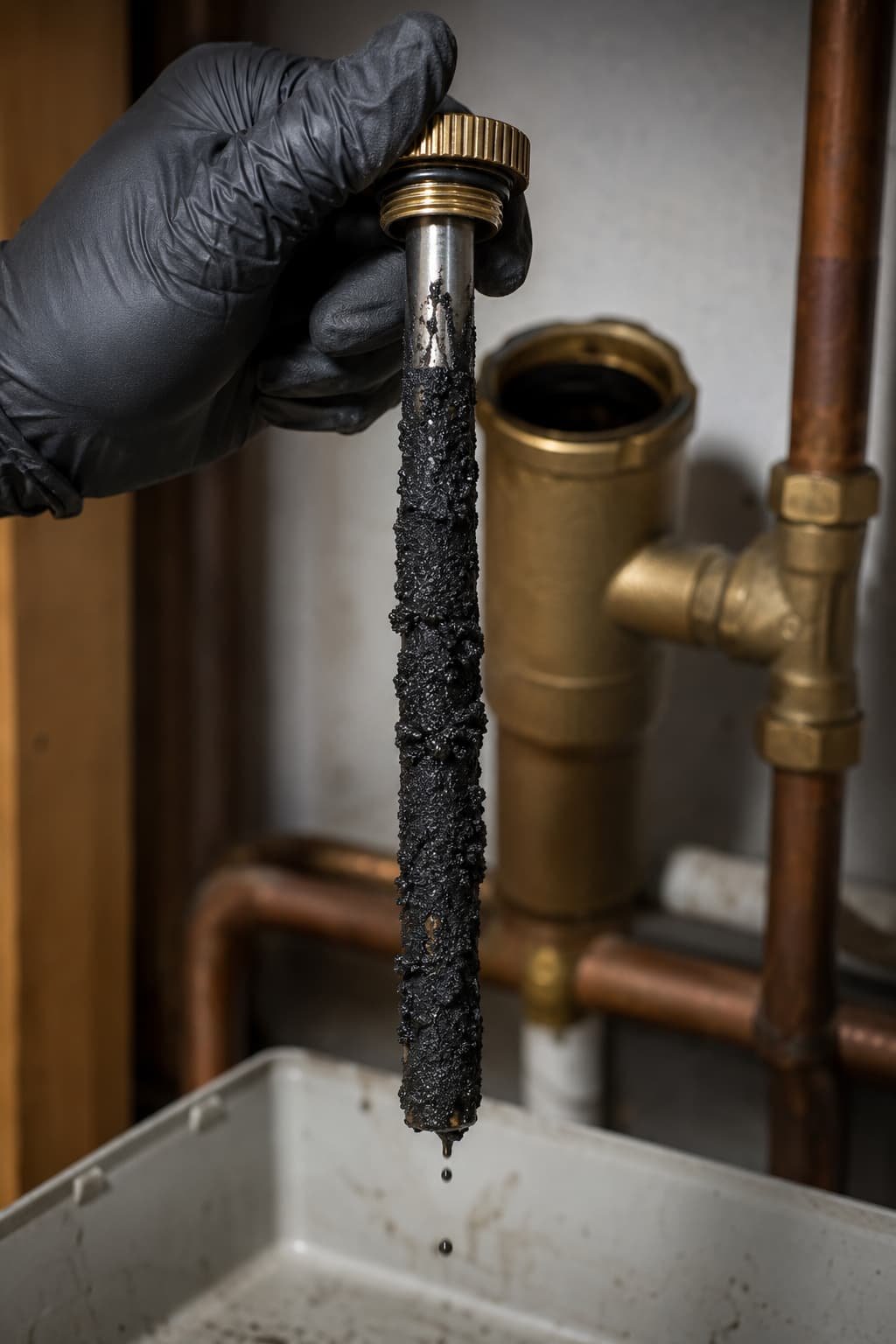
What builds up instead is magnetite. Any heating system that has drawn in air, which every old open vented system with a loft tank has done continuously for decades, corrodes its steel radiators slowly from the inside. The product of that corrosion is a fine black sludge that circulates, then settles in the coolest, slowest parts of the system. It collects in the bottom of radiators, chokes the pump, and coats the narrow waterways of a modern boiler’s heat exchanger, where it does the most damage.
Signs Your System Needs Attention
You do not need an engineer to spot the early symptoms. Any of these on their own is worth noting, and two or more together points clearly at a system full of sludge.
- Radiators cold at the bottom but warm at the top. This is the classic sludge signature, distinct from cold at the top and warm at the bottom, which is trapped air and a different, cheaper fix.
- Some radiators never getting properly hot while others are fine, particularly the ones furthest from the boiler.
- The boiler making a banging or kettling noise when it fires, as restricted flow lets water overheat against the heat exchanger.
- Dirty black water when you bleed a radiator, rather than clear or slightly discoloured.
- The system needing frequent bleeding, which introduces yet more air and accelerates the whole process.
Power Flush or Chemical Clean?
These are not the same thing, and the difference affects the price. A chemical clean circulates a cleaning agent through the system using the existing pump over a period, then drains and refills. It is gentler, cheaper, and adequate for a system that is only mildly affected or that is being cleaned as a precaution before a new boiler goes on.
A full power flush uses dedicated high flow equipment and is the right answer for a system that is genuinely clogged, where radiators are already failing to heat and the sludge is established. It is more thorough and more expensive. A competent installer recommends the one your system actually needs, having looked at it, rather than defaulting to whichever suits the quote. In the Rotherham area you can expect to pay between £350 and £650, depending mainly on the number of radiators and the state of the water.
The Magnetic Filter Is What Stops It Coming Back
A flush cleans the system at a point in time. It does nothing to prevent the sludge returning, and on an old steel system it will return. This is where the magnetic filter earns its place.
Fitted to the return pipe just before the boiler, a magnetic filter catches circulating magnetite on a magnet before it can reach the heat exchanger, and it is cleaned out at each annual service. Every mainstream boiler manufacturer now makes a system filter and a documented clean a condition of the warranty, which tells you how seriously the industry takes the problem. Fitting a new boiler onto an old system without cleaning it and without a filter is not a saving, it is a warranty waiting to be voided.
What a Proper Flush Day Looks Like
A full power flush on an average Rotherham house takes the best part of a day, and it is worth knowing the shape of it so you can tell a thorough job from a rushed one. The engineer connects the flushing unit to the system, usually at the pump or a convenient radiator, and circulates a cleaning chemical to break down the sludge and any corrosion deposits. Each radiator is then flushed individually, often with the flow reversed and a gentle agitation to shift material that has compacted in the bottom, and a magnet is used on the unit to pull the magnetite out of circulation.
The system is flushed until the water running clear, not until the clock says stop. A job finished in ninety minutes on a heavily sludged ten radiator system was not a power flush, it was a chemical circulate with a flush name and a flush price. When the water runs clean, the system is refilled with fresh water dosed with corrosion inhibitor, and the magnetic filter is fitted if one is not already present.
How Long the Results Last
A properly flushed, inhibited system with a working filter should stay clean for many years. The inhibitor does the chemical work of slowing corrosion, the filter catches what corrosion still occurs, and the annual service is when the filter is emptied and the inhibitor level checked and topped up. Neglect all three and the sludge simply rebuilds, which is why a flush on its own, without the filter and without the yearly maintenance, is a temporary fix rather than a cure. The flush cleans the past; the filter and the inhibitor manage the future.
When You Do and Do Not Need One
You need a flush or a thorough clean when the symptoms above are present, and always as part of fitting a new boiler to an older system, because the manufacturer requires it and because a new heat exchanger is exactly what the sludge will attack first. You do not need a routine power flush on a young, clean, sealed system that has a working filter and has been properly inhibited. Selling one in that situation is the version of this job that gives the whole practice a bad name, and it is worth questioning if you are offered it without a symptom to justify it.
If you are weighing up a new boiler, our boiler installation and boiler replacement pages explain how the system clean fits into the wider job, and our boiler servicing page covers how the filter is maintained afterwards. For the broader question of what a full installation should cost and include, see our guide to new boiler prices.
Industry guidance on system cleaning and water treatment is published by the HHIC if you want to read around the subject before deciding.